
What Changed in the 2025–2030 U.S. Dietary Guidelines (And Why It Matters)
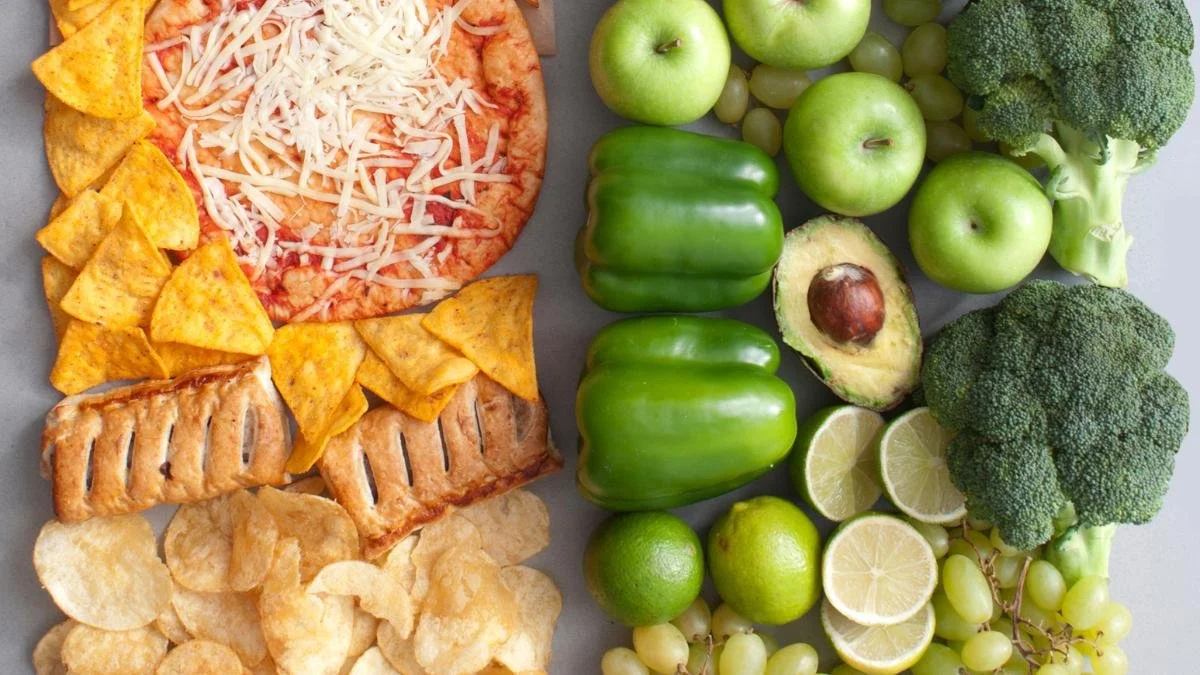
Side-by-side comparison of whole foods and processed foods illustrating changes in modern dietary patterns
The 2025–2030 U.S. Dietary Guidelines were released recently, and for the first time in a long time, they’re pointing in a direction that actually makes sense.
Less sugar.
Fewer processed foods.
More protein.
That alone is a meaningful shift.
But, as with most government nutrition guidance, there are also a few contradictions and unanswered questions. Here’s a clear, no-hype breakdown of what changed - and why it matters.
What Changed in the 2025–2030 U.S. Dietary Guidelines?
The updated dietary guidelines focus on one core message: eat more real, whole foods and fewer ultra-processed ones.
This is a major departure from decades of advice that emphasized refined grains, seed oils, and low-fat processed foods.
Highly Processed Foods Still Dominate the U.S. Diet
Highly processed and engineered foods currently make up the bulk of the U.S. diet. This pattern is strongly linked to rising rates of metabolic disease, obesity, and chronic illness.
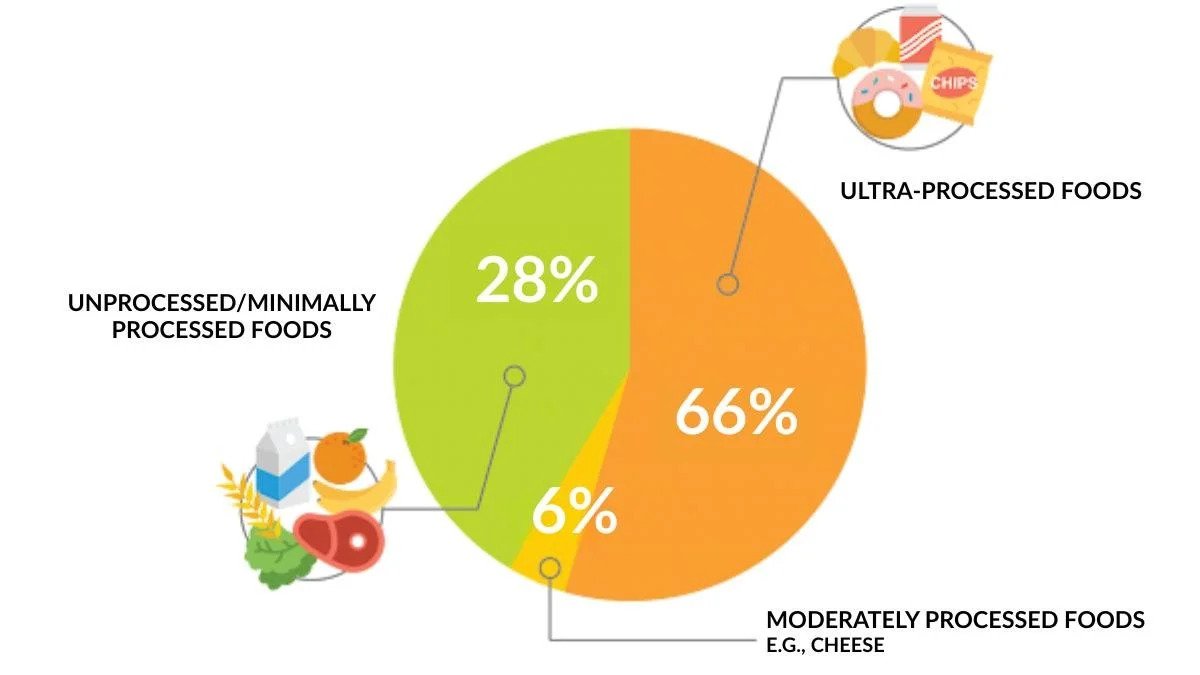
Highly processed food intake compared to whole foods in the U.S. diet.
The Food Pyramid Has Changed
The familiar MyPlate graphic is gone, and the older food pyramid model has effectively been flipped.
While the categories remain similar, the proportions have changed significantly.
Key Changes in the New Food Pyramid
Grains play a smaller role
Grains are no longer the foundation of daily calorie intake. Recommendations have dropped from 7–11 servings per day to roughly 2–4 servings. This is a huge win!Protein recommendations increased
Protein intake increased from 0.8 g/kg of body weight to 1.2–1.5 g/kg. This is a meaningful improvement, especially for supporting energy, muscle mass, and healthy aging.Added sugar limits tightened
Added sugar is now capped at no more than 10 grams per meal. For children, the recommendation is even stronger: no added sugars at all.Processed foods are discouraged
Refined grains are finally acknowledged as highly processed carbohydrates, with whole foods encouraged instead.
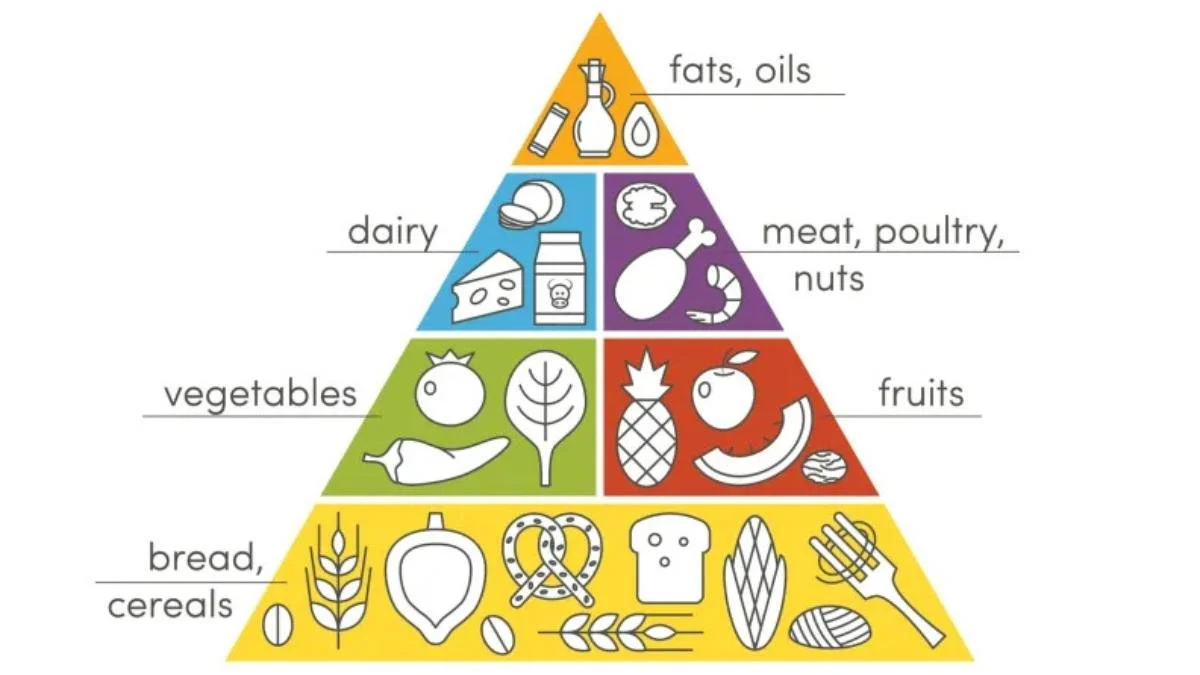
1992 U.S. Dietary Guidelines Food Pyramid
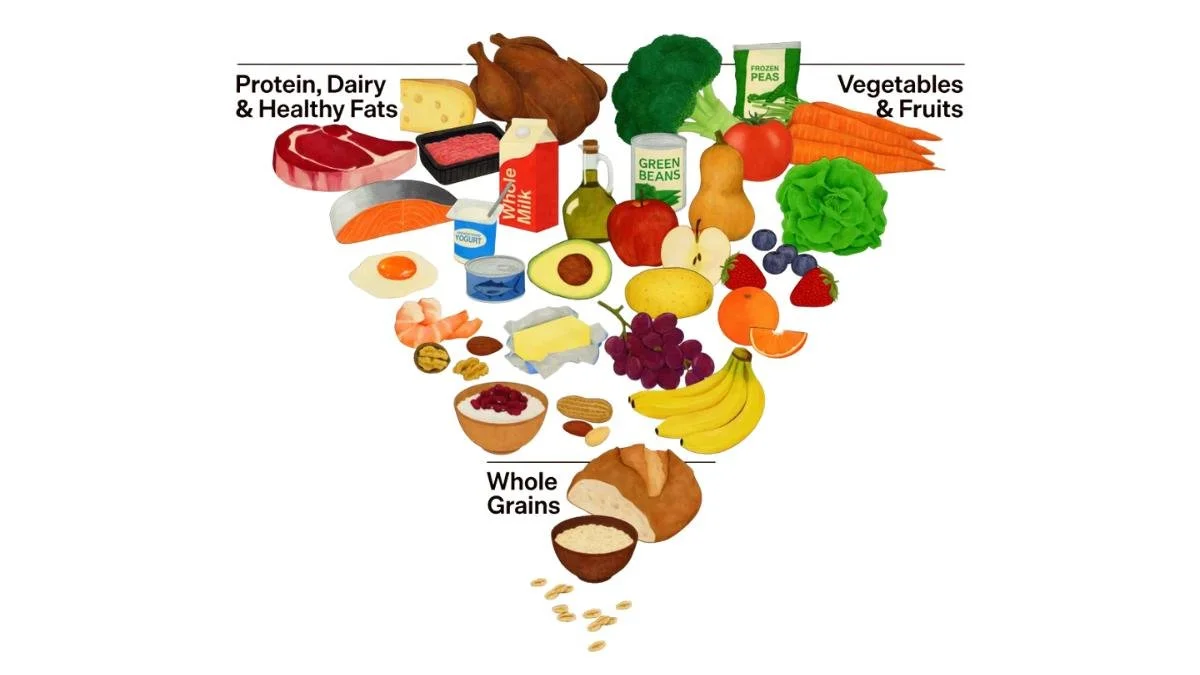
New 2026 U.S. Dietary Guidelines Food Pyramid (2025-2030)
Where the Dietary Guidelines Don’t Quite Add Up
While protein recommendations increased, the guidelines still cap saturated fat at 10% of total calories.
At the same time, the new food pyramid clearly displays more foods that naturally contain saturated fat, such as red meat, butter, and tallow.
Those two messages don’t fully align.
It’s likely that the current focus is on reducing sugar and ultra-processed foods first, with fat recommendations evolving over time. This is an area worth watching.
Why the New Dietary Guidelines Matter
1 in 4 Americans receive food through federal programs that must follow these guidelines.
This includes:
School lunches
Military food programs
Meals for older adults
Food assistance programs for low-income families
Meeting higher protein targets while staying under a very low saturated fat cap (and under a strict budget) often pushes these programs toward:
More seed oils
Highly processed plant-based proteins
Fewer animal-based protein sources
Many of the plant-based proteins used at scale are highly processed (think soy protein isolate). And unhealthy seed oils remain the default fat source, rather than traditional fats like butter or tallow.
The Added Sugar Question for Children
The statement “no amount of added sugar is recommended for children” is one of the strongest positions the guidelines have taken.
The intent is solid.
But without changes in food manufacturing, labeling, and marketing, this remains difficult to implement. Real households are faced with rising prices, limited budgets, and a deluge of ultra-processed and inexpensive foods targeted toward kids lining the grocery store shelves.
My Take
Overall, the 2025–2030 U.S. Dietary Guidelines represent progress.
Less sugar.
Fewer processed foods.
More protein.
Not everything is perfect, and some contradictions remain. But this is a meaningful shift away from decades of guidance that clearly wasn’t working.
As always, this isn’t about eating perfectly or following rules blindly. It’s about paying attention to what supports your energy and making realistic choices that fit your real life.
Stay On Top of Health News
There’s a lot of conflicting health & wellness information out there. Join my free Skool community to find out what’s happening and what it means for you.
Love this post?
Pin it for later or share with a friend!